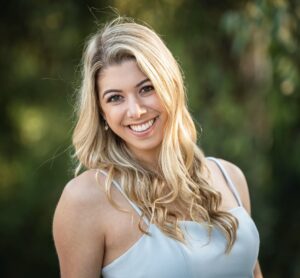






"I'm definitely keeping our tutor for our whole package. He's such a joy to have, and works so well with our son."
Tutoring > Science > New York, NY
Top Private Science Tutors In New York City
In-home, 1-on-1 science tutoring built around your student
Grade Potential connects students and families with local science, biology, chemistry, and physics tutors. One-on-one sessions take place at home, online, or wherever works best for you.

Testimonials & Reviews
What NYC Students & Parents Say
Why Grade Potential


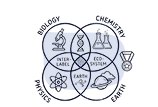
Science Tutoring By Subject & Class
From middle school physical science to college chemistry exam prep, Grade Potential connects families with private science tutors. Sessions can take place at home, online, or at another convenient location, with availability beginning within 48 hours in many areas.
Biology
Chemistry
Physics
Earth & Space Science
Integrated Science
Environmental Science
Anatomy & Physiology
AP & College Science Courses
Science Tutoring For All Grades & Levels
Science tutors support students from middle school through college. That range matters because the support a sophomore in honors physics needs looks different from what a college junior may need in organic chemistry. We connect families and students with tutors experienced in the specific course, materials, and assessment formats involved.
Middle School
Life Science & Human Body Systems
Intro to Chemistry & Physical Science
Force, Motion & Energy
Earth, Weather & Space Science
High School
Biology & AP Biology
Chemistry & AP Chemistry
Physics & AP Physics
Environmental Science & Anatomy
College
General Biology & Chemistry
Organic Chemistry & Biochemistry
Intro Physics & Advanced Physics
Anatomy, Physiology & Lab Sciences
How It Works
Share Your Child’s Unique Needs
Tell us about your child’s grade level, coursework, and goals. We use this information to match your family with a tutor who fits perfectly, no guesswork required.
We Do the Matching for You
This isn’t a marketplace where you have to sort through profiles. Grade Potential reviews your child’s needs and connects you with the right tutor, so you don’t have to spend time searching.
Start Sessions on Your Schedule
Once matched, sessions happen when and where it works best for you. Your child gets focused, 1-on-1 support from a vetted tutor, quickly, easily, and without any hassle.
Science Standards and Curriculums in New York City
Middle School Science Standards and Curriculums
NYC Public Schools middle grade science follows the New York State P–12 Science Learning Standards (NYSSLS), an adaptation of the NGSS used across many states. Rather than separating biology, chemistry, and earth science into distinct courses, the standards weave all three through each grade. A 7th grader might work through force and motion and cell biology in the same unit. The grade 8 state science exam, aligned to these updated standards, was first administered in spring 2024, so schools and students are still adjusting to the newer format.
High School Science Standards and Curriculums
New York requires three science credits to graduate, and students must pass at least one science Regents exam. In many NYC high schools, Biology comes first, followed by Earth Science, Chemistry, or Physics. The Biology Regents was replaced by the new Life Science: Biology exam, first administered in June 2025. The updated Chemistry and Physics Regents follow in June 2026. An Advanced Regents diploma requires passing two science exams, one in life science and one in physical science.
College Science Coursework and Prerequisites
At NYU, Columbia, and across the CUNY system, introductory science courses can shape progress in pre-health and STEM tracks. General chemistry, organic chemistry, biology, and physics are often demanding, and a weak grade in one of them can affect the timeline for pre-med or nursing pathways. Students who enter with a stronger foundation in high school science often have an easier time adjusting to college-level coursework.
Science Test Scores in New York City
New York assesses science at grades 5 and 8, with both exams aligned to the New York State P–12 Science Learning Standards. Statewide in 2024-2025, 44% of students in grades 5 and 8 scored proficient in science. That means fewer than half of tested students met science proficiency statewide. Science is also assessed less frequently than math and reading, so schools and families may have fewer formal checkpoints for spotting gaps.
Entrance Exam Test Scores in New York City
SAT Scores
The SAT has no standalone science section, but scientific reasoning runs through the whole exam. The Evidence-Based Reading and Writing section regularly pulls from passages covering experimental design, data interpretation, and evidence-based argument. Students who are comfortable reading graphs and interpreting lab-style summaries may be better prepared for parts of both sections. Within New York City, SAT participation sits at roughly 22%, alongside broader test-optional admissions policies and CUNY’s decision to stop requiring the SAT. For students targeting selective schools, strong analytical science skills remain relevant.
ACT Scores
The ACT is far less common in New York, with fewer than 10% of state graduates taking it, typically those applying out of state or those who perform better on its format. The ACT Science section does not test memorized content. It tests whether someone can read a data table, spot trends across experiments, and evaluate conflicting scientific viewpoints under time pressure. For NYC students who have worked through the Regents science sequence, those reasoning skills are directly transferable.
Science Programs and Resources Near NYC
Science University Programs
A strong science record in NYC puts some of the country’s top programs within reach without leaving the city. NYU’s biology and science departments offer programs spanning molecular biology, neuroscience, and ecology, while Columbia’s programs connect life and physical sciences to research and health fields. The CUNY system provides accessible entry points into biology, chemistry, and environmental science at Baruch, Hunter, and City College. Rockefeller University, known internationally for biomedical research, accepts a small number of undergraduates through specialized tracks.
Science Resources
Columbia’s Science Honors Program is a Saturday morning program designed for 10th through 12th graders with a strong interest in science and mathematics. NYU ARISE is a 10-week competitive summer research program placing NYC high school juniors and seniors in working university labs across more than 50 research areas. The American Museum of Natural History pairs 10th and 11th graders with museum scientists through its Science Research Mentoring Program. All three are competitive and built for those already performing above grade level.
Finding A Science Tutor In New York City, NY
What does a science tutor do?
New York City science tutors support students as they work toward the New York State Education Department (NYSED) science learning standards.
The goal of this curriculum is to help students build the skills they need for STEM-related careers and to understand the complex science of the world we live in.
A tutor can be especially helpful when it comes to hands-on work such as lab reports. Your student might understand the science but struggle to write a hypothesis, analyze data, or write conclusions. A tutor can support your student by creating a framework for scientific writing.
From learning about chemical reactions in middle school to subjects like Inheritance and Variation of Traits in high school, a tutor can work with your student to identify where they may be confused and then support them as they build understanding.
How do I know if you or your student needs a science tutor?
If your student is avoiding their science homework or taking hours to finish it, they may benefit from tutoring. Other signs that your student might need tutoring include struggling to stay organized, confusion about science vocabulary, or exhibiting a new level of frustration.
If you notice any of these signs, a science tutor can support your student as they make their way through the NYSED science learning standards.
In their elementary school ecosystems class, for example, they’ll learn about the patterns plants and animals use to survive. If they don’t understand these concepts, it can make the material harder to follow in their high school ecosystems class when they evaluate the role of group behaviors on species’ chances of survival.
What science subjects can a New York City science tutor support?
In elementary school, tutors offer support with concepts like matter, light, and weather. In middle school, this shifts to earth science and life science classes, which prepare students for high school, when they study biology, chemistry, and physics.
These courses generally build upon each other, so it may be helpful to hire a tutor as soon as you notice your student struggling. This is important because New York City requires six science credits, as well as a score of 65 or higher on one of the Regents’ science exams, to graduate from high school.
How do I find the best in-person science tutor near me in New York City?
It’s helpful to look for a tutor who is familiar with New York City’s science curriculum and the NYSED science learning standards; someone who understands the unique ways students interact with the city itself while they conduct investigations in and out of the classroom.
Additionally, try to find a science tutor with experience teaching at your student’s grade level. A tutor who excels at teaching high school students may not have the skills or temperament to teach a first grader.
How much does a science tutor cost?
Science tutoring in New York City costs between $30 and $200 per hour, depending on the specific subject, grade level, and tutor experience. High school tutors typically charge more than elementary and middle school tutors because of the complexities of high school science.
These rates consider a tutor’s expertise in science, of course, but also teaching strategies and their ability to connect with their students.
Can a science tutor support stronger grades in science?
Once your student’s learning gaps are identified, a tutor can support them in learning the science concepts they missed the first time around. Going back to build a more solid foundation means your student is more likely to understand the science class they’re taking now.
This new clarity may translate into stronger grades. But this is about more than just grades.
For instance, the four New York City high school science courses (biology, earth and space sciences, chemistry, and physics) are designed with specific performance expectations that align with the Regents exam in science.
So when your student’s science grade improves, they are not only gaining more proficiencies in the specific class they’re in, but they’re also building a stronger foundation for the Regents exam, an important milestone in New York high school education.
Can a science tutor support homework and test prep?
Yes! When a tutor supports homework, they give your student the time they need to learn, break apart concepts into smaller components, and create a consistent learning structure.
Whether your student is struggling to understand how to draw conclusions from a lab experiment or doesn’t understand the meanings of scientific terms, a tutor can offer support.
A tutor can work with your student in real time as they do their homework and provide support as challenges come up.
And once your student is in high school and studying for their science Regents exam, the SAT, or the ACT, a tutor can shift gears to work with them on test prep, focusing on subject matter, creating a study plan, and teaching test-taking strategies.
What are the benefits of science tutoring for middle school students in New York City?
Middle school science in New York City becomes more complex. Students are introduced to new technologies, like robotics and digital simulations, and they begin conducting experiments in their communities. A tutor can support your student developing these new skills.
Additionally, in eighth grade, students take the State Assessment in Science, which assesses how well they understand the New York State Learning Standards. This exam will test students on concepts like formulating hypotheses and making predictions, among other things.
Seventh grade students who are on track to take a high-school level science course in eighth grade can also take the State Assessment in Science.
If your student is in either of those situations, a tutor can support them as they study for this important test.
What are the benefits of science tutoring for high school students in New York City?
In NYSED high school science, students deepen their understanding of the concepts they have learned in previous classes, and they must complete at least three years of science.
Typically, NYC students take the science classes aligned with the Regents standards: Biology in 9th grade, Chemistry or Earth Science in 10th grade, and Physics or AP Environmental Science in 11th grade. Their senior year, students can take an advanced placement (AP) science course, college science, or an elective.
In 2025, just 58% of New York students passed the Regents biology exam and 56% passed the Regents earth and space sciences exam. A tutor can support your student in understanding these complex subjects.
An important note: Starting in June 2026, there will be major changes to the Physics and Chemistry Regents exams. These updated exams will consist of a different structure and will align with the most current New York State P-12 Science Learning Standards (NYSP12SLS).
With the support of a tutor who’s knowledgeable about these learning standards, your student can better prepare for the Regents.
What are the benefits of science tutoring for college students in New York City?
The need for tutoring doesn’t necessarily end after high school. Some college students benefit from support as they navigate a new level of education.
Many introductory college courses are taught in a lecture-style to a large number of students. The lessons can seem impersonal, and some students may end up feeling lost. A tutor can bring a personal connection to the learning process.
A tutor might be knowledgeable about the specific structure of CUNY courses or have experience tutoring students who are taking college lab classes for the first time.
In addition to coursework tutoring, if your student is majoring in science and planning to find a career in a science field, some tutors may be able to support them as they plan courses, do job research, and even prep for interviews.
What qualities should I look for in a science tutor?
Make sure the tutor you choose is familiar with the NYSED curriculum at your student’s grade level. But personal components are important to consider, too. You want a tutor who is patient, flexible, and goes at your student’s pace.
A strong tutor understands the importance of a hands-on approach to science and gives your student plenty of opportunities to try things, make mistakes, and learn from them. At the same time, a science tutor needs to be able to bring abstract concepts, like electric fields, to life.
What’s the best way to prepare for the NYS science test in New York?
The NYS science test is given in fifth grade and then again in eighth grade. It asks students to demonstrate scientific knowledge, make hypotheses and predictions, and understand scientific inquiry.
Basically, the test assesses how well your student knows the NYS learning standards up to the grade they’re in, so you want a tutor who understands the NYS learning standards and how they build on one another to support your student’s preparation for this test.
Is science tutoring tax-deductible in New York City?
In most instances, tutoring is not tax-deductible under either Federal or New York state tax law.
However, families who have a student with a diagnosed disability like ADD or ADHD might be able to deduct tutoring costs if they have a licensed physician recommending it. But the tutor may need to be certified in treating your student’s particular disability.
Some employer-sponsored dependent care flexible spending accounts may allow tutoring under some conditions. Because this area of tax law is specialized and subject to change, it’s a good idea to talk with a tax professional familiar with New York State tax laws.
Frequently Asked Questions (FAQs)
How does the process work?
Families share goals and scheduling preferences through a short intake. That information becomes a learner profile. Grade Potential then introduces your profile to a professional independent tutor whose background aligns. Once the tutor accepts, you’re introduced directly and sessions can begin.
How is pricing handled?
Our packages are highly customizable based on your budget, preferred session cadence, time frame, location, and a few other factors. You’ll be presented with clear pricing before you begin. We support families in choosing the session length and cadence that works best for their individual situation; no hard sales tactics and no obligation to purchase a long-term package.
How soon can sessions start?
Typically within 2-3 business days, depending on subject, location, and schedule availability. Urgent timelines are noted in your profile so introductions prioritize your timing.
Where do sessions take place?
In-person at home or another convenient, quiet, safe location (like the local library). When families need flexibility, online sessions are also available.
Who are the tutors?
Experienced, professional independent tutors with strong subject knowledge and a track record of working one-on-one with students. Many hold degrees in their fields; some are certified teachers or graduate students with specialized expertise.
Are background checks performed?
Yes—safety is our top priority. Tutors complete screening through Simpliverified background checks, consistent with local requirements and platform standards.
What if the tutor isn't the right fit?
Just let Grade Potential know. Your profile can be introduced to a different tutor at no cost to you, and once accepted, you’ll be re-introduced so sessions continue without losing momentum.
What subjects and grade levels are available?
Support spans elementary through college across all core subjects (math, reading, writing, science, languages) plus test prep (e.g., SAT/ACT, AP, GRE) and many electives. If it’s taught in school, there’s likely a tutor with relevant experience. Adult learners can also benefit from tutoring services in a wide variety of subjects.
How long is each session, and how often do students meet?
Most families choose 60-90 minute sessions 1-2 times per week. Cadence and length are set directly with the tutor to fit the student’s goals, pace, and schedule.
Can siblings or small groups learn together?
Often, yes! Especially when goals and levels are similar. There’s no additional cost for siblings to share sessions, so feel free share details in your intake so we can advise on the right tutoring package for you.
Do tutors coordinate with teachers or IEP/504 plans?
Yes! When families request it, tutors can review teacher notes, school portals, and accommodation plans to keep sessions aligned with classroom expectations.
References
- https://www.schools.nyc.gov/learning/subjects/science
- https://www.nysed.gov/standards-instruction/science
- https://www.schools.nyc.gov/learning/student-journey/graduation-requirements
- https://www.schools.nyc.gov/enrollment/enroll-grade-by-grade/high-school
- https://www.schools.nyc.gov/enrollment/enroll-grade-by-grade/specialized-high-schools
- https://www.nysed.gov/state-assessment/how-are-regents-examinations-scored
- https://www.nysed.gov/sites/default/files/programs/state-assessment/5-8-educator-guide-science-2025.pdf
- https://nyclearn.com/faqs/can-take-tutoring-deduction-taxes/
- https://sites.google.com/schools.nyc.gov/nysed-info/nysed-info
- https://infohub.nyced.org/reports/academics/test-results
- https://www.nysed.gov/standards-instruction/science-faq
- https://resources.finalsite.net/images/v1687775395/esbocesorg/vett0ssldzanjrydoklj/2_TimelineonNYSStandardsandAssessments-CURRENTDRAFT_KD.pdf
- https://www.nysed.gov/news/2025/state-education-department-releases-preliminary-data-english-language-arts-mathematics-and
- https://neighbors.columbia.edu/news/free-and-low-cost-summer-youth-programs-columbia-university
- https://www.lumiere-education.com/post/science-programs-for-high-school-students-in-nyc
- https://www.veritasai.com/veritasaiblog/stem-programs-for-high-school-students-in-nyc
- https://www.nysed.gov/sites/default/files/programs/curriculum-instruction/sciencefaq.pdf