





Tutoring > Science > Boston, MA

Top Private Science Tutors In Boston, MA

In-home, 1-on-1 science tutoring built around your student

Grade Potential makes finding a science tutor in Boston, MA simple. We connect K–12 and college students with private science tutors at home, on campus, or wherever works best.

Get a Quote

Testimonials & Reviews

What Boston Students & Parents Say

Get a Quote
Call Us Now

Why Grade Potential

Science Tutoring By Subject & Class

Grade Potential connects Boston students and families with science tutors for everything from biology to organic chemistry.

Biology

Cells, genetics, ecosystems, and the human body. A strong foundation for life science and health-related coursework.

Chemistry

Atoms, reactions, the periodic table, and bonding. A course where math and science start working closely together.

Physics

Motion, forces, energy, and waves. A course that often requires strong algebra and problem-solving skills.

Earth & Space Science

Weather, geology, oceans, and the solar system. Builds understanding of Earth systems and space science concepts.

Integrated Science

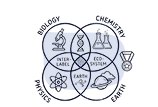
Biology, chemistry, and physics combined into one course. Designed to connect major science concepts across disciplines.

Environmental Science

Ecosystems, climate, pollution, and natural resources. Connects science concepts to real-world environmental issues.

Anatomy & Physiology

Bones, muscles, organs, and body systems. Common for students exploring nursing, health science, and related fields.

AP & College Science Courses

College-level rigor with higher expectations for labs, exams, and independent problem solving.

Biology

Cells, genetics, ecosystems, and the human body. A strong foundation for life science and health-related coursework.

Chemistry

Atoms, reactions, the periodic table, and bonding. A course where math and science start working closely together.

Physics

Motion, forces, energy, and waves. A course that often requires strong algebra and problem-solving skills.

Earth & Space Science

Weather, geology, oceans, and the solar system. Builds understanding of Earth systems and space science concepts.

Integrated Science

Biology, chemistry, and physics combined into one course. Designed to connect major science concepts across disciplines.

Environmental Science

Ecosystems, climate, pollution, and natural resources. Connects science concepts to real-world environmental issues.

Anatomy & Physiology

Bones, muscles, organs, and body systems. Common for students exploring nursing, health science, and related fields.

AP & College Science Courses

College-level rigor with higher expectations for labs, exams, and independent problem solving.

Science Tutoring For All Grades & Levels

Grade Potential matches Boston students and families with science tutors from middle school through college.

Middle School

Life Science & Human Body Systems
Intro to Chemistry & Physical Science
Force, Motion & Energy
Earth, Weather & Space Science

High School

Biology & AP Biology
Chemistry & AP Chemistry
Physics & AP Physics
Environmental Science & Anatomy

College

General Biology & Chemistry
Organic Chemistry & Biochemistry
Intro Physics & Advanced Physics
Anatomy, Physiology & Lab Sciences

How It Works

STEP 1

Share Your Unique Needs

Tell us about your child’s grade level, current coursework, and goals. We use that information to connect your family with a local tutor who fits your needs.

STEP 2

We Narrow Down Your Options

This is not a marketplace where you sort through profiles and hope for the best. Grade Potential reviews your child’s needs and does the work of connecting your family with the right tutor.

STEP 3

Start Sessions on Your Schedule

Once you are connected, sessions happen on your schedule, in a setting that works for you. Your child gets focused, 1-on-1 support from a vetted professional, right from the start.

STEP 1

Share Your Child’s Unique Needs

Tell us about your child’s grade level, coursework, and goals. We use this information to match your family with a tutor who fits perfectly, no guesswork required.

STEP 2

We Do the Matching for You

This isn’t a marketplace where you have to sort through profiles. Grade Potential reviews your child’s needs and connects you with the right tutor, so you don’t have to spend time searching.

STEP 3

Start Sessions on Your Schedule

Once matched, sessions happen when and where it works best for you. Your child gets focused, 1-on-1 support from a vetted tutor, quickly, easily, and without any hassle.

Get a QuoteCall Us Now

Science Standards And Curriculums In Boston, MA

Middle School Science

Boston Public Schools middle grades follow the Massachusetts Science and Technology/Engineering Framework and use OpenSciEd, a phenomenon-based program that integrates life science, earth and space science, physical science, and engineering design across grades 6–8. The 8th grade MCAS STE measures grade-level science expectations. For students applying to BPS exam schools, MAP Growth scores and middle school GPA factor into the composite admissions score.

High School Science

Boston high school students typically complete lab-based science coursework such as Biology, Chemistry, Physics, or approved science electives. Many BPS high schools also offer AP Biology, AP Chemistry, AP Physics, and AP Environmental Science. Students still take the high school MCAS STE assessment, though after Question 2 passed in November 2024, MCAS scores are no longer tied to the statewide Competency Determination requirement for graduation.

College Science

Boston-area college students may complete lab science requirements as part of general education, while science majors take more advanced coursework in biology, chemistry, physics, and related fields. Students at MIT, Harvard, BU, Northeastern, Tufts, UMass Boston, and Boston College may pursue lab coursework, undergraduate research, pre-health pathways, or co-op opportunities depending on their program.

Science Test Scores In Boston, MA

The MCAS Science and Technology/Engineering exam measures STE proficiency in grades 5, 8, and once in high school. In 2025, 46% of Massachusetts 5th graders, 37% of 8th graders, and 46% of high school students met or exceeded expectations on STE. Grade 8 results remained below pre-pandemic levels, down 9 points from 2019. These checkpoints give families context for tracking science readiness across elementary, middle, and high school.

Entrance Exam Science Scores In Boston, MA

MAP Growth For BPS Exam School Admissions

Boston Latin School, Boston Latin Academy, and the John D. O’Bryant School of Mathematics and Science use a composite score based on MAP Growth and GPA. Students need at least a B average to be eligible, and the composite score is weighted 30% MAP Growth and 70% GPA. While MAP Growth focuses on reading and math, strong classroom performance in science can support the GPA portion of the application.

ACT Scores

The ACT can include a Science section that measures data interpretation, research summaries, and scientific reasoning. With the enhanced ACT, Science is optional and reported separately when selected. Some Boston students may choose the ACT depending on their college list and preferred test format.

Science Programs and Resources In Boston, MA

Science University Programs

Boston-area students considering biology, chemistry, physics, engineering, or health-related majors have several local options, including MIT, Harvard, Boston University, Northeastern, Tufts, Boston College, UMass Boston, and Simmons University. Programs may include lab coursework, undergraduate research, co-op experiences, pre-health pathways, and preparation for graduate or professional study.

Science Resources

Boston students can explore science beyond the classroom through museums, university programs, and local enrichment opportunities. The Museum of Science Boston, Harvard Museum of Natural History, and the MIT Edgerton Center K–12 Outreach all offer exhibits, school programs, public events, and STEM learning opportunities for students.

Finding A Science Tutor In Boston, MA

Frequently Asked Questions (FAQs)

References

  • https://www.bostonpublicschools.org/academics/office-of-teaching-and-learning/science-technology-engineering-ste/science-instructional-scope-sequences-prek-hs
  • https://www.doe.mass.edu/frameworks/scitech/2016-04.pdf
  • https://www.bostonpublicschools.org/academics/office-of-teaching-and-learning/science-technology-engineering-ste/science-teaching-learning-resources/curriculum-resources
  • https://edgerton.mit.edu/k-12-education
  • https://www.bostonpublicschools.org/academics/exam-schools
  • https://www.doe.mass.edu/mcas/2025/results/summary.pdf
  • https://ballotpedia.org/Massachusetts_Question_2,_Repeal_Competency_Assessment_Requirement_for_High_School_Graduation_Initiative_(2024)
  • https://www.bostonpublicschools.org/academics/office-of-teaching-and-learning/science-technology-engineering-ste