
 Education from St. Louis Community College (2...
Kylie
National, US

Grade Potential connects families and students with local tutors across pre-algebra, algebra 1, algebra 2, college algebra, and linear algebra. One-on-one sessions take place at home, online, or wherever works best for you.





 Education from St. Louis Community College (2...
National, US
 Bachelor of Science in Chemical Engineering
National, US
Anupam is a highly experienced professional with a B.S. in Chemical Engineering from the University of Texas at Austin and an MIT Sustainability Management Certificate. With over 10 years in the oil and gas industry, specializing in business development and M&A, Anupam excels in complex problem-solving and financial analysis. He enjoys helping K-6 students, including his nieces and nephews, build foundational skills and develop a confident approach to learning.
 B.A. in English
National, US
Selina is a multilingual English educator with over seven years of experience teaching Language Arts and ESL to students aged 6 to 17. She earned her degree in English and Spanish from the College of Mount Saint Vincent. Selina specializes in boosting reading comprehension, grammar, and essay writing skills, fostering a love for literacy through a warm, student-centered approach that builds both academic ability and confidence.
 Bachelor of Arts in English Literature and Ci...
National, US
Gabe is an experienced tutor specializing in K-12 academic support with over six years of experience. A cum laude graduate of Binghamton University with a Bachelor of Arts in English Literature and Cinema, he has worked with students both privately and at learning centers like Huntington Learning Center. Gabe is particularly adept at fostering engagement and motivation, helping students build confidence and develop essential skills in subjects like reading, writing, and various K-12 academic areas.
 Associate of Science in Business Software App...
National, US
Annalou is a dedicated tutor with an Associate of Science in Business Software Applications and over 15 years of experience in finance and administration. Known for her patient and adaptable teaching style, she excels at meeting students at their individual learning pace. Annalou has extensive experience in training new staff in financial systems and has also taught young children, making her adept at simplifying complex information and fostering a supportive learning environment.
"I want to commend Joan for her excellent tutoring. Thanks to her, my daughter has a much better understanding of Calculus and feels more confident going into next semester. We're very grateful for her help!"

National
"We have been so satisfied with our tutor. My niece is having fun while learning. Thank you! "

National
"My child has always struggled terribly in math and now with our tutor she is improving and now has a B in her math class. She has gained confidence and she is no longer opposed to learning! Our tutors have made a world of different in our child! "

National
"Our tutor Duane is great! He has really connected with Gauge, and has been making sure that he is on track with all his schoolwork."

National
"Our tutor was A PERFECT MATCH for our student. She knew exactly how to help them, she was a great asset to us, and she fit right into the family."

National

No commute, no waiting rooms, no scheduling around a center’s hours. Grade Potential tutors go to you, whether that is your home, your local library, or a nearby coffee shop. Sessions happen where it is easiest for your family.


Grade Potential connects students with local subject-matter experts based on their grade, specific challenges, learning style, and your family’s schedule.

Safety is our top priority. Every tutor is screened through multiple background checks, consistent with local requirements and platform standards. You can feel confident knowing who is coming into your home and working with your child.

Real results speak for themselves. In a recent survey, 96% of Grade Potential families said they were likely or very likely to recommend us to another family. Every session is built around what your child specifically needs to catch up and get ahead.

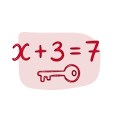






Most algebra tutoring needs come into play in middle school and high school, where pre-algebra, Algebra 1, and Algebra 2 shape what comes next academically. College algebra and linear algebra extend that range further. The pace, grading, and expectations shift at every level, so tutoring should reflect the specific course a student is taking.




Tell us where your child wants to level up and what success looks like for your family. We use that to build a learner profile and match them with the right local tutor.

No sorting through endless profiles and hoping for the best. Grade Potential does the work of connecting your family with an experienced tutor based on your learner’s goals and learning style. We have made thousands of matches. You just have to say yes.

Once you are matched, your tutor comes to you. Sessions happen on your schedule, in a setting that works for you. Your child gets focused, 1-on-1 support from a qualified professional, right from the start.
An algebra tutor breaks down operations like factoring, distribution, and solving multi-step equations into the individual steps a student needs to see. When a student keeps getting the wrong answer, the tutor pinpoints whether the issue is sign handling, order of operations, or a gap carried forward from a prior course, and works that specific skill until it holds.
Look for patterns over time, not just a single low grade. A 7th grader who follows along in class but cannot set up a one-step equation independently, or a 10th grader who solves practice problems correctly but struggles on the unit test, may need support with the underlying math concept, not just more repetition. In algebra, that distinction matters because extra practice on the current unit may not fix a skill gap from an earlier one.
Algebra tutoring covers pre-algebra, Algebra 1, Algebra 2, college algebra, and linear algebra. Common focus areas within those courses include solving equations, working with inequalities, factoring polynomials, graphing functions, and translating word problems into expressions.
Start by identifying the specific area where a student needs support. Algebra is often less about the whole subject and more about one or two concepts that need extra attention. A tutor who has worked with students at the same course level and knows how that material is assessed will make faster progress than one who is simply strong in math. The goal is to find a tutor who aligns with your student’s current class and learning style.
Private algebra tutors cost between $50 and $150 per hour nationally. Pre-algebra and Algebra 1 sessions tend toward the lower end, while Algebra 2, college algebra, and test prep fall higher. Total cost is shaped by timing: a student who begins when the current course first becomes difficult typically needs fewer sessions than one who needs reinforcement from a prior algebra course.
Yes. Algebra lends itself to targeted intervention because the skills are discrete and sequential. If a student's grades are suffering because they cannot factor trinomials, a tutor addresses factoring directly, confirms fluency, and then connects that skill forward to rational expressions or quadratic equations. That kind of precision can support stronger grades over time, especially when sessions stay aligned to the classroom calendar.
Algebra homework reveals very specific error patterns. A student who consistently drops the negative when distributing, or who sets up an equation correctly but solves it with inverse operation errors, is showing a tutor which skill may need reinforcement. Sessions use that information rather than re-explaining the full lesson. For SAT and ACT prep, the algebra content is fairly consistent: linear equations, systems, quadratics, and basic function behavior make up a large share of scored questions.
Pre-algebra and introductory Algebra 1 are typically introduced between 6th and 8th grade. Students encounter negative number arithmetic, variable expressions, and one or two-step equations for the first time, often within the same semester. A tutor provides the focused repetition that classroom pacing may not always allow, particularly on the transition from arithmetic to symbolic reasoning.
Algebra 1 and Algebra 2 appear on transcripts and serve as prerequisites for every upper-level math and science course. A student who passes Algebra 1 without fully grasping linear functions may carry that weakness into Algebra 2, where it can continue to affect quadratics, polynomials, and rational expressions. Tutoring at this level keeps a student current in the course while reinforcing the specific skills each new chapter assumes were already mastered.
College algebra and linear algebra move fast and assume fluency with operations most students last practiced in high school. A tutor identifies which foundational skills need reinforcement without slowing progress in the current course. For students in tracks where a prerequisite grade determines what they register for next, targeted support can directly affect their academic timeline.
Look for someone who can explain the same concept through more than one method. Factoring, for instance, can be taught through grouping, the box method, or trial and error, and different students respond to different approaches. Beyond instructional flexibility, look for a tutor with experience in the student’s specific course. Course sequencing and assessment formats can vary, so familiarity with the current curriculum matters.
Algebra involves multi-line written work where small errors in sign handling, distribution, or combining terms cascade through the rest of a solution. In person, a tutor watches the student write each step and can intervene at the exact moment reasoning shifts off course. That level of observation can be harder to replicate through a screen. Online sessions can work well for light review or targeted question prep, but for building consistent fluency in algebraic operations, side-by-side sessions are often especially useful.
Many learning centers follow a set curriculum sequence, which may not match where the student’s teacher is in the syllabus. If the center is covering polynomial operations this week but the classroom exam is on systems of equations, the mismatch can mean a student is practicing material that may not appear on the next test. A private tutor can work from the actual syllabus, current assignment, and next assessment, so sessions stay aligned with the algebra a student is being graded on.