





"Our tutor Xaviera was very professional, just listening to how she was helping my granddaughter was amazing. I cannot recommend her enough to anyone who needs tutoring! After meeting with her for 2 hours, my grandchild's teacher took notice and told me how much she had improved in such a short time period. We hope to meet with Xaviera again someday!"
Tutoring > Geometry
Top Private Geometry Tutors Near You
In-home, 1-on-1 geometry tutoring built around your student
Grade Potential connects students and families with local geometry, trigonometry, and SAT/ACT test prep tutors. One-on-one sessions take place at home, online, or wherever works best for you.

Testimonials & Reviews
What Students & Parents Say
Why Students & Families Choose Grade Potential


Geometry Tutoring By Subject & Class
Geometry is typically taken in 9th or 10th grade, though some students start earlier through accelerated programs. As students move through topics like shapes, proofs, and introductory trigonometry, the focus of each session should match what they’re learning in class and where they need more clarity.
Angles & Triangles
Rectangles, Parallelograms & Trapezoids
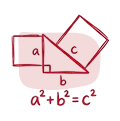
Pythagorean Theorem
Area of Shapes & Polygons
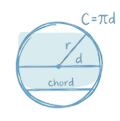
Circles
Proofs & Logical Reasoning
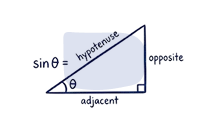
Basic Trigonometry (Sine, Cosine, Tangent)
SAT & ACT Geometry Prep
Get Connected With A Geometry Tutor Near You
Grade Potential connects students with high school geometry tutors in their area. Select your state below to explore private geometry tutor options near you.
How It Works
Share Your Child’s Unique Needs
Tell us about your child’s grade level, coursework, and goals. We use this information to match your family with a tutor who fits perfectly, no guesswork required.
We Do the Matching for You
This isn’t a marketplace where you have to sort through profiles. Grade Potential reviews your child’s needs and connects you with the right tutor, so you don’t have to spend time searching.
Start Sessions on Your Schedule
Once matched, sessions happen when and where it works best for you. Your child gets focused, 1-on-1 support from a vetted tutor, quickly, easily, and without any hassle.
Finding A Geometry Tutor
What does a geometry tutor do?
Geometry tutoring covers angles, triangles, rectangles, circles, area, the Pythagorean theorem, ratios, and basic trigonometry. A tutor can also work with students on proofs, which require writing out logical steps to explain why a solution is correct. For students preparing for the SAT or ACT, sessions can include timed practice on geometry-specific questions.
How do I know if a student needs a geometry tutor?
If a student is spending a long time on homework, getting confused by diagrams, or having trouble with topics like parallelograms, angles in polygons, or quadrilaterals, those can be signs they need more support. A tutor can provide support on the specific topics causing difficulty before gaps build over time.
How do I find a geometry tutor near me?
Start by looking at your student’s syllabus, recent tests, or graded homework to see which concepts are causing trouble, whether that’s proofs, coordinate geometry, circle theorems, or right triangles. It can also help to ask the teacher whether the main issue is understanding the material, interpreting diagrams, or making mistakes on assessments. From there, look for a tutor who has experience with those specific challenges and can align sessions to what your student is covering in class.
How much does a geometry tutor cost?
Private geometry tutoring typically ranges from $50 to $150 per hour depending on the tutor’s experience, course complexity, and your location. Tutors with experience in honors-level coursework, proofs, or SAT and ACT prep may charge more.
Can a geometry tutor support homework and test prep?
Yes. Homework shows exactly which topics a student understands and which ones need more attention. A tutor can use those assignments to reinforce how to set up proofs, apply the right area formula, or work through circle problems correctly. For test prep, sessions can focus either on the specific format a teacher uses for exams or on timed SAT and ACT geometry practice, depending on the student’s needs.
What are the benefits of geometry tutoring for accelerated middle school students?
Students taking geometry in 8th grade are moving into high school-level material earlier than most of their peers. The course typically covers topics like angles in polygons, rectangles, and the pythagorean theorem at a faster pace with higher grading standards. A tutor can keep an advanced student on track week to week and build the foundation they’ll need for Pre-Calculus and AP Calculus in high school.
What are the benefits of geometry tutoring for high school students?
In 9th and 10th grade, geometry introduces skills most students haven’t practiced before, like working with similarity and proportions, and applying basic trigonometry. A tutor can work alongside what’s being taught in class so a student builds confidence with each new unit instead of carrying confusion from one topic into the next, especially as the material moves toward circles and areas.
What qualities should I look for in a geometry tutor?
Look for someone who explains the “why” behind each step, not just the answer. A good geometry tutor can show a student how to break down a word problem, read a diagram correctly, or figure out which formula applies to a shape like a trapezoid versus a square. It’s also worth asking whether they’ve taught the specific math sequence your student’s school follows, since topic order can vary between programs.
Is in-person geometry tutoring more effective than online tutoring?
Geometry relies heavily on diagrams, shapes, and visual problem solving. A tutor sitting next to a student can sketch a triangle, label the angles, or mark up a figure in real time, which is faster and clearer than doing the same thing over a screen.
What is the difference between a private geometry tutor and a learning center?
Learning centers typically follow their own schedule. If a student is learning about circles but the center is covering triangles, the sessions won’t match what’s actually affecting their grade. A private tutor works directly from a student’s syllabus, upcoming tests, and the specific proof format their teacher expects. In geometry, even a correct answer written in the wrong format can be marked down, so that alignment matters.
Frequently Asked Questions (FAQs)
How does the process work?
Families share goals and scheduling preferences through a short intake. That information becomes a learner profile. Grade Potential then introduces your profile to a professional independent tutor whose background aligns. Once the tutor accepts, you’re introduced directly and sessions can begin.
How is pricing handled?
Our packages are highly customizable based on your budget, preferred session cadence, time frame, location, and a few other factors. You’ll be presented with clear pricing before you begin. We support families in choosing the session length and cadence that works best for their individual situation; no hard sales tactics and no obligation to purchase a long-term package.
How soon can sessions start?
Typically within 2-3 business days, depending on subject, location, and schedule availability. Urgent timelines are noted in your profile so introductions prioritize your timing.
Where do sessions take place?
In-person at home or another convenient, quiet, safe location (like the local library). When families need flexibility, online sessions are also available.
Who are the tutors?
Experienced, professional independent tutors with strong subject knowledge and a track record of working one-on-one with students. Many hold degrees in their fields; some are certified teachers or graduate students with specialized expertise.
Are background checks performed?
Yes—safety is our top priority. Tutors complete screening through Simpliverified background checks, consistent with local requirements and platform standards.
What if the tutor isn't the right fit?
Just let Grade Potential know. Your profile can be introduced to a different tutor at no cost to you, and once accepted, you’ll be re-introduced so sessions continue without losing momentum.
What subjects and grade levels are available?
Support spans elementary through college across all core subjects (math, reading, writing, science, languages) plus test prep (e.g., SAT/ACT, AP, GRE) and many electives. If it’s taught in school, there’s likely a tutor with relevant experience. Adult learners can also benefit from tutoring services in a wide variety of subjects.
How long is each session, and how often do students meet?
Most families choose 60-90 minute sessions 1-2 times per week. Cadence and length are set directly with the tutor to fit the student’s goals, pace, and schedule.
Can siblings or small groups learn together?
Often, yes! Especially when goals and levels are similar. There’s no additional cost for siblings to share sessions, so feel free share details in your intake so we can advise on the right tutoring package for you.
Do tutors coordinate with teachers or IEP/504 plans?
Yes! When families request it, tutors can review teacher notes, school portals, and accommodation plans to keep sessions aligned with classroom expectations.