





"I just can't say enough good things about it. While It would have been enough to just pass the TEAS test, she aced it. I appreciate the help. Riva did so well. She completed the test in 2 hours and 45 minutes. Riva is so excited, she is so happy. We called the tutor and told her thanks and in the future, I will gladly use you. "
Tutoring > Science > Brooklyn, NY
Top Private Reading Tutors In Brooklyn
In-home, 1-on-1 reading tutoring built around your student
Grade Potential connects Brooklyn, NY students with experienced private reading tutors, from K-12 through college, at home, on campus, or at a location that fits your schedule.

Testimonials & Reviews
What Brooklyn Students & Parents Say
Why Grade Potential


Science Tutoring By Subject & Class
Grade Potential connects Brooklyn students and families with science tutors for everything from biology to organic chemistry.
Biology
Chemistry
Physics
Earth & Space Science
Integrated Science
Environmental Science
Anatomy & Physiology
AP & College Science Courses
Science Tutoring For All Grades & Levels
Grade Potential matches Brooklyn students and families with science tutors from middle school through college.
Middle School
Life Science & Human Body Systems
Intro to Chemistry & Physical Science
Force, Motion & Energy
Earth, Weather & Space Science
High School
Biology & AP Biology
Chemistry & AP Chemistry
Physics & AP Physics
Environmental Science & Anatomy
College
General Biology & Chemistry
Organic Chemistry & Biochemistry
Intro Physics & Advanced Physics
Anatomy, Physiology & Lab Sciences
How It Works
Share Your Child’s Unique Needs
Tell us about your child’s grade level, coursework, and goals. We use this information to match your family with a tutor who fits perfectly, no guesswork required.
We Do the Matching for You
This isn’t a marketplace where you have to sort through profiles. Grade Potential reviews your child’s needs and connects you with the right tutor, so you don’t have to spend time searching.
Start Sessions on Your Schedule
Once matched, sessions happen when and where it works best for you. Your child gets focused, 1-on-1 support from a vetted tutor, quickly, easily, and without any hassle.
Science Standards And Curriculums
Middle School Science
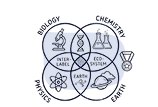
Across the Brooklyn borough, middle schools are adapting to the New York State P–12 Science Learning Standards (NYSSLS). This framework teaches Biology, Chemistry, and Earth Science together rather than teaching them as isolated subjects.
In addition, local classrooms rely on curriculum programs like Amplify Science to meet these hands-on requirements. And, with the newly updated Grade 8 Intermediate-Level Science Test (ILS) fully underway, students face rigorous, multidisciplinary problem-solving.
High School Science
To graduate from a Brooklyn high school, students need three science credits and must pass the state’s Regents exams, which have undergone some changes recently. The new Life Science: Biology exam started last year (2025), and the updated Chemistry and Physics Regents exams take effect in June 2026.
If a student wants an Advanced Regents diploma, they need to pass both a Life Science and a Physical Science exam.
College Science
Starting a science path at local schools like Brooklyn College, NYU, or Columbia can feel like a big jump. For pre-med and nursing students, tough introductory courses in Organic Chemistry, Biology, and Physics come right away.
A strong high school science background can make the transition to college-level coursework smoother. Specifically, having a solid foundation of Biology, Chemistry, and Physics understanding may support your student’s readiness for pre-med, nursing, or other STEM pathways.
Test Scores
According to the New York State Education Department, 44% of students across the state scored proficient on the latest round of the New York State Elementary-Level Science Test (for 5th grade) and the Grade 8 Intermediate-Level Science Test (for 8th grade).
This suggests that many students across New York are still working to meet state standards. Because these tests happen less often than math or reading, catching learning gaps early is important. Science tutoring can reinforce foundational skills as students prepare for standardized tests.
Entrance Exam Scores
SAT Scores
There is no specific science section on the SAT, but scientific reasoning is necessary for other parts of the exam.
For example, students will be better prepared for the Evidence-Based Reading and Writing section if they understand experimental design, data interpretation, and evidence-based argument. In addition, students who are comfortable reading graphs and interpreting summaries may be better prepared for the exam.
Within all NYC Public Schools (including Brooklyn), SAT participation sits at roughly 22%. That said, for students targeting selective schools, the SAT and strong analytical science skills may still be necessary.
ACT Scores
The ACT is far less common in New York, with fewer than 10% of high school graduates taking it. Within that 10%, the most common reason for taking the exam is to apply to an out-of-state school.
If a student opts to take the ACT Science section, it’s important to keep in mind that it doesn’t test memorized content. Instead, it tests whether they can read a data table, spot trends across experiments, and evaluate conflicting scientific viewpoints under time pressure.
For Brooklyn students who have worked through the Regents science sequence, those reasoning skills are directly transferable.
Programs and Resources
Science University Programs
Top colleges in Brooklyn and other boroughs offer incredible STEM pathways. CUNY Brooklyn College features one of the region’s most highly rated computer and natural science departments, while NYU’s Tandon School of Engineering ranks among the top engineering schools nationwide.
Getting into these competitive programs starts early. Admissions teams consider students’ academic records, including science coursework and performance. This makes strong study habits in middle school and high school valuable.
Science Resources
Science learning happens in Brooklyn neighborhoods across the borough, through active, budget-friendly programs.
The Brooklyn Public Library hosts free Summer@BPL science workshops and hands-on experiments in its local branches. For a great mix of academics and outdoor exploration, NYC’s free Summer Rising program provides excellent STEM activities for middle schoolers.
These local programs are great for building science skills while having fun.
Finding A Science Tutor In Brooklyn
What does a science tutor do?
A science tutor provides one-on-one support based on your student’s coursework. They can break down tough ideas, support your student as they make sense of confusing lab reports, and explain how to use and understand complicated formulas.
A tutor can also teach great study habits to help your student feel confident and ready to take classroom exams and state and standardized tests.
How do I know if my student needs a science tutor?
Be on the lookout for a few common signs. Your student might feel overwhelmed by their Living Environment class. They may feel anxious about upcoming science exams. Or they may be getting frustrated with homework assignments.
If you notice any of those signs, it might be time to ask a tutor for help. Getting support early gives your student the boost they need to understand the material and feel confident in class again.
What subjects can a science tutor support?
Many tutors familiar with the NYC Public Schools pathways and standards can cover every science subject your student will encounter.
For Brooklyn middle schoolers, science tutoring can support general Life and Physical Science classes. For high schoolers, tutors may focus on concepts covered in advanced Regents classes like Chemistry, Earth Science, and Physics.
Whether your teen is tackling AP Biology or just discovering the basics of ecosystems, a tutor can guide them on their learning journey.
How do I find a science tutor near me?
Finding a tutor in Brooklyn isn’t as complicated as you might expect. Start by asking your student’s teacher about the areas where they’re struggling. Then let Grade Potential do the heavy lifting for you.
After learning more about your student’s goals, schedule, and subject needs, Grade Potential can connect your family with an independent tutor in our network who aligns with those preferences.
How much does a science tutor cost in Brooklyn?
Tutoring rates across Brooklyn typically range from $30 per hour to $90 per hour but can vary based on the tutoring format (online or in person), the tutor’s experience, and the subject being studied.
For example, a tutor may charge $40 per session to guide your IS 201 middle schooler through the New York State P-12 Science Learning Standards, but $80 per session to support your Brooklyn Collegiate junior through the Next Generation Science Standards.
Grade Potential’s network of independent tutors offers both in-person and online sessions built around your family’s availability.
Can a science tutor support homework and exam preparation?
Yes! In fact, this is what many tutors focus on. If your student is balancing a demanding coursework load, a tutor can support them as they manage their daily assignments.
When classroom science exams, midterms, or finals come around, a tutor can create targeted practice quizzes that give your student exposure to the testing experience and prepare them for what’s to come.
Can a science tutor support standardized test preparation?
Yes, many science tutors offer standardized test preparation support. The ACT has a specific science section that tests data analysis, while the SAT weaves scientific data into its reading and math questions.
A tutor can guide your student through practice exams and show them how to read complex graphs, analyze experiments quickly, and manage their time so they can feel confident on the science portions of these standardized exams.
What are the benefits of science tutoring for middle school students in Brooklyn?
Middle school science introduces heavy concepts like cell division and physical forces. For a Brooklyn middle schooler, tutoring can make these abstract ideas clear through practice, fun examples, and support for daily homework.
Tutors can also help build strong organizational skills and teach your student how to write proper lab reports. This extra support can build their confidence and create a solid science foundation, which can make the transition to high school science classes much smoother.
What are the benefits of science tutoring for high school students in Brooklyn?
High school science moves fast and covers a lot of ground, especially in competitive programs like Brooklyn Latin. A tutor can help your student keep up with the rapid pace of Regents and AP classes, focusing on understanding the concepts rather than simply memorizing facts for a test.
This personalized, one-on-one tutoring can provide additional academic support and build confidence as your student prepares for future college STEM majors.
What are the benefits of science tutoring for college students in Brooklyn?
College science courses at campuses like Brooklyn College or NYU can feel impersonal. A tutor can provide the one-on-one attention that large lecture halls lack and guide your student through advanced subjects like Organic Chemistry or Calculus-Based Physics.
A tutor can also share high-level study techniques so that your student can feel prepared for exams, midterms, and finals.
What’s the best way to prepare for the State Assessment in Science and the Regents Exam?
The best way to prepare for the State Assessment in Science is consistent, focused practice.
A tutor can review past public exams with your student so they can get comfortable with the digital testing layout. They can also guide your student as they practice analyzing charts, forming hypotheses, and writing clear short answers.
For the Regents Exam, preparation comes down to understanding the core concepts being tested. A tutor can help your high schooler learn how to decipher the reference tables used during the test, get comfortable with the exam format, and understand the mathematical relationships under consideration.
Frequently Asked Questions (FAQs)
How does the process work?
Families share goals and scheduling preferences through a short intake. That information becomes a learner profile. Grade Potential then introduces your profile to a professional independent tutor whose background aligns. Once the tutor accepts, you’re introduced directly and sessions can begin.
How is pricing handled?
Our packages are highly customizable based on your budget, preferred session cadence, time frame, location, and a few other factors. You’ll be presented with clear pricing before you begin. We support families in choosing the session length and cadence that works best for their individual situation; no hard sales tactics and no obligation to purchase a long-term package.
How soon can sessions start?
Typically within 2-3 business days, depending on subject, location, and schedule availability. Urgent timelines are noted in your profile so introductions prioritize your timing.
Where do sessions take place?
In-person at home or another convenient, quiet, safe location (like the local library). When families need flexibility, online sessions are also available.
Who are the tutors?
Experienced, professional independent tutors with strong subject knowledge and a track record of working one-on-one with students. Many hold degrees in their fields; some are certified teachers or graduate students with specialized expertise.
Are background checks performed?
Yes—safety is our top priority. Tutors complete screening through Simpliverified background checks, consistent with local requirements and platform standards.
What if the tutor isn't the right fit?
Just let Grade Potential know. Your profile can be introduced to a different tutor at no cost to you, and once accepted, you’ll be re-introduced so sessions continue without losing momentum.
What subjects and grade levels are available?
Support spans elementary through college across all core subjects (math, reading, writing, science, languages) plus test prep (e.g., SAT/ACT, AP, GRE) and many electives. If it’s taught in school, there’s likely a tutor with relevant experience. Adult learners can also benefit from tutoring services in a wide variety of subjects.
How long is each session, and how often do students meet?
Most families choose 60-90 minute sessions 1-2 times per week. Cadence and length are set directly with the tutor to fit the student’s goals, pace, and schedule.
Can siblings or small groups learn together?
Often, yes! Especially when goals and levels are similar. There’s no additional cost for siblings to share sessions, so feel free share details in your intake so we can advise on the right tutoring package for you.
Do tutors coordinate with teachers or IEP/504 plans?
Yes! When families request it, tutors can review teacher notes, school portals, and accommodation plans to keep sessions aligned with classroom expectations.
References
- https://www.schools.nyc.gov/learning/subjects/science
- https://www.nysed.gov/standards-instruction/science
- https://www.schools.nyc.gov/learning/student-journey/graduation-requirements
- https://www.schools.nyc.gov/enrollment/enroll-grade-by-grade/high-school
- https://www.schools.nyc.gov/enrollment/enroll-grade-by-grade/specialized-high-schools
- https://www.nysed.gov/state-assessment/how-are-regents-examinations-scored
- https://www.nysed.gov/sites/default/files/programs/state-assessment/5-8-educator-guide-science-2025.pdf
- https://www.nysedregents.org/
- https://www.schools.nyc.gov/learning/testing
- https://www.gblions.org/parent-resources/nysed-parent-dashboard
- https://infohub.nyced.org/reports/students-and-schools/school-quality/information-and-data-overview
- https://tools.nycenet.edu/