




Tutoring > Science > Los Angeles, CA

Top Private Science Tutors In Los Angeles, CA

In-home, 1-on-1 science tutoring built around your student

Get matched with local science, biology, chemistry, and physics tutors in Los Angeles, CA. One-on-one sessions take place at home, online, or wherever works best for you.

Get a Quote

Testimonials & Reviews

What Students & Parents Say

Get a Quote
Call Us Now

Why Students & Families Choose Grade Potential

Science Tutoring By Subject & Class

Science courses in Los Angeles often require more than content knowledge. Students are expected to work with lab analysis, mathematical modeling, and evidence-based writing. Tutors in Grade Potential’s network can support both the material and the way students are expected to apply it in class.

Biology

Cells, genetics, ecosystems, and the human body. A strong foundation for life science and health-related coursework.

Chemistry

Atoms, reactions, the periodic table, and bonding. A course where math and science start working closely together.

Physics

Motion, forces, energy, and waves. A course that often requires strong algebra and problem-solving skills.

Earth & Space Science

Weather, geology, oceans, and the solar system. Builds understanding of Earth systems and space science concepts.

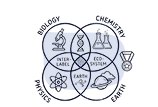
Integrated Science

Biology, chemistry, and physics combined into one course. Designed to connect major science concepts across disciplines.

Environmental Science

Ecosystems, climate, pollution, and natural resources. Connects science concepts to real-world environmental issues.

Anatomy & Physiology

Bones, muscles, organs, and body systems. Common for students exploring nursing, health science, and related fields.

AP & College Science Courses

College-level rigor with higher expectations for labs, exams, and independent problem solving.

Biology

Cells, genetics, ecosystems, and the human body. A strong foundation for life science and health-related coursework.

Chemistry

Atoms, reactions, the periodic table, and bonding. A course where math and science start working closely together.

Physics

Motion, forces, energy, and waves. A course that often requires strong algebra and problem-solving skills.

Earth & Space Science

Weather, geology, oceans, and the solar system. Builds understanding of Earth systems and space science concepts.

Integrated Science

Biology, chemistry, and physics combined into one course. Designed to connect major science concepts across disciplines.

Environmental Science

Ecosystems, climate, pollution, and natural resources. Connects science concepts to real-world environmental issues.

Anatomy & Physiology

Bones, muscles, organs, and body systems. Common for students exploring nursing, health science, and related fields.

AP & College Science Courses

College-level rigor with higher expectations for labs, exams, and independent problem solving.

Science Tutoring For All Grades & Levels

Science in LAUSD covers a wide range, from middle school students learning about life sciences, to college students working through organic chemistry. Each level comes with its own expectations and common challenges.

Middle School

Life Science & Human Body Systems
Intro to Chemistry & Physical Science
Force, Motion & Energy
Earth, Weather & Space Science

High School

Biology & AP Biology
Chemistry & AP Chemistry
Physics & AP Physics
Environmental Science & Anatomy

College

General Biology & Chemistry
Organic Chemistry & Biochemistry
Intro Physics & Advanced Physics
Anatomy, Physiology & Lab Sciences

How It Works

STEP 1

Share Your Unique Needs

Tell us about your child’s grade level, current coursework, and goals. We use that information to connect your family with a local tutor who fits your needs.

STEP 2

We Narrow Down Your Options

This is not a marketplace where you sort through profiles and hope for the best. Grade Potential reviews your child’s needs and does the work of connecting your family with the right tutor.

STEP 3

Start Sessions on Your Schedule

Once you are connected, sessions happen on your schedule, in a setting that works for you. Your child gets focused, 1-on-1 support from a vetted professional, right from the start.

STEP 1

Share Your Child’s Unique Needs

Tell us about your child’s grade level, coursework, and goals. We use this information to match your family with a tutor who fits perfectly, no guesswork required.

STEP 2

We Do the Matching for You

This isn’t a marketplace where you have to sort through profiles. Grade Potential reviews your child’s needs and connects you with the right tutor, so you don’t have to spend time searching.

STEP 3

Start Sessions on Your Schedule

Once matched, sessions happen when and where it works best for you. Your child gets focused, 1-on-1 support from a vetted tutor, quickly, easily, and without any hassle.

Get a QuoteCall Us Now

Science Standards And Curriculums In Los Angeles, CA

Middle School Science Standards and Curriculums

LAUSD adopted the Integrated Model recommended by the California NGSS Framework, which weaves biology, chemistry, and physics together within each grade level rather than teaching them as separate courses. A 7th grader might study chemical reactions alongside ecosystems and energy transfer in the same unit. The integrated approach means that when a student falls behind, the source of the confusion can be difficult to isolate. A gap in a 7th grade unit might trace back to a physical science concept from 5th grade that was never reinforced.

High School Science Standards and Curriculums

Science in LAUSD high schools follows the A-G framework. Students must complete two years of laboratory science to graduate, and UC and CSU admission requires a C or better in each. Most campuses offer Biology, Chemistry, and Physics as the core sequence, with AP Biology, AP Chemistry, AP Physics, AP Environmental Science, and Anatomy available at many schools. These courses do not build on each other in a single sequence. A student can perform well in Biology and still run into difficulty in Chemistry because the thinking it requires is fundamentally different.

College Science Coursework and Prerequisites

College science courses in Los Angeles move quickly and assume full command of prerequisite material. Organic chemistry assumes general chemistry. Biochemistry assumes both. Physics II assumes calculus proficiency that many students did not fully retain. For pre-med, nursing, and STEM students at UCLA, USC, or other LA-area programs, course grades can play a role in program eligibility. A weak semester in a gatekeeper course can delay an application by a full year.College science courses in Los Angeles move quickly and assume full command of prerequisite material. Organic chemistry assumes general chemistry. Biochemistry assumes both. Physics II assumes calculus proficiency that many students did not fully retain. For pre-med, nursing, and STEM students at UCLA, USC, or other LA-area programs, course grades can play a role in program eligibility. A weak semester in a gatekeeper course can delay an application by a full year.

Science Test Scores In Los Angeles, CA

The assessment is the California Science Test, known as the CAST, which measures student performance against the CA NGSS. Results from the 2024 to 2025 school year showed continued improvement for LAUSD, with science proficiency rising 3.3 percentage points over the prior year. Even with that progress, many LAUSD students are still not meeting grade-level science expectations, and the district trails the statewide average of about 33%. For families in Los Angeles, the testing gap matters as much as the proficiency gap because science is assessed less frequently than math. That means some students may need additional support long before a state assessment reflects it.

Entrance Exam Test Scores In Los Angeles

SAT Scores

The SAT does not include a standalone science section, but scientific reasoning shows up throughout the exam. The Evidence-Based Reading and Writing section regularly includes passages drawn from natural and social sciences, and the math section tests data analysis and problem-solving skills that rely on interpreting scientific data. A student with weaker foundations in data interpretation or experimental reasoning may feel those gaps on both sections. California students averaged a composite SAT score of 1086, above the national average of 1028, though only about 26% of California graduates take the exam. For students targeting competitive UC campuses close to home, strong analytical and science-informed reasoning can play an important role in admissions outcomes.

ACT Scores

The ACT includes a dedicated Science section, which is one reason some LA students with strong science backgrounds prefer it. The section does not test memorized content. It tests whether a student can read a data table, spot trends across experiments, and evaluate conflicting scientific viewpoints under time pressure. Only about 3% of California graduates take the ACT, so the state’s average composite of 26.5 reflects a small, self-selected group. For students considering both exams, the ACT Science section can be a genuine advantage if their coursework has built strong data interpretation and reasoning skills, particularly through LAUSD’s NGSS-aligned curriculum, which emphasizes exactly those competencies.

Science Programs and Resources In Los Angeles, CA

Science University Programs

A strong high school science transcript in Los Angeles can open the door to a wide range of respected science programs close to home. UCLA ranks among the top 20 nationally in biological sciences, chemistry, and earth sciences, with graduate programs in molecular biology and biochemistry that compete globally. USC’s Dornsife College runs interdisciplinary science programs that connect life and physical sciences to engineering and health research. Caltech in Pasadena is widely known for its science programs in physics, chemistry, and biology, with a small-campus model that can give undergraduates earlier access to research opportunities. All three institutions consider the high school science transcript in admissions, and for students applying from LAUSD, the A-G science sequence is where that record starts.

Science Resources

UCLA’s COSMOS program is a competitive, state-funded four-week residential summer program for California high school students completing grades 8 through 12. Students work directly with UC faculty on advanced STEM topics including biomedical science, ecology, and physics. Financial aid is available. The California Science Center in Exposition Park offers free general admission and runs hands-on science workshops for pre-K through 8th grade students aligned to the CA NGSS. These programs serve students ready for more advanced challenges. For students who need to close specific gaps in their current coursework first, consistent 1-on-1 tutoring can be a strong starting point.

Finding A Science Tutor In Los Angeles, CA

Frequently Asked Questions (FAQs)