





Tutoring > Geometry > Los Angeles, CA

Top Private Geometry Tutors In LA

In-home, 1-on-1 geometry tutoring built around your student

Grade Potential makes finding the right geometry tutor in Los Angeles, CA simple. We connect K-12 and college students with private geometry tutors at home, on campus, or wherever works best.

Get a Quote
Geometry Tutoring Overlay

Testimonials & Reviews

What Parents & Students Say

Get a Quote
Call Us Now

Why Families & Students Choose Grade Potential

Geometry Tutoring By Subject & Class

Grade Potential connects students and families with geometry tutors across every level, from middle school foundations through college coursework.

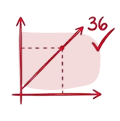
Angles & Triangles

Measuring, classifying, and solving for missing values. One of the first major topics in geometry and a foundation for everything that follows.

Rectangles, Parallelograms & Trapezoids

Properties, area, and perimeter of four-sided figures. Shows up consistently across classwork, quizzes, and unit exams.

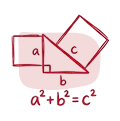
Pythagorean Theorem

The relationship between the sides of a right triangle. Applied throughout geometry and carried forward into trigonometry and beyond.

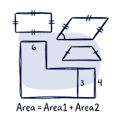
Area of Shapes & Polygons

Calculating the space inside triangles, trapezoids, and other polygons. A practical skill tested regularly in geometry coursework.

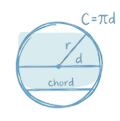
Circles

Radius, diameter, circumference, arc length, and sector area. A major standalone unit in most geometry courses with its own vocabulary and formulas.

Proofs & Logical Reasoning

Constructing step-by-step arguments for why a geometric statement is true. One of the most distinct and challenging skills introduced in geometry.

Trigonometry (Sine, Cosine, Tangent)

Ratios that describe the relationship between angles and sides in right triangles. Introduced in geometry and built on through precalculus and calculus.

SAT & ACT Geometry Preparation

Angles, area, circles, and coordinate geometry. Geometry concepts appear across both exams and benefit from targeted practice.

Angles & Triangles

Measuring, classifying, and solving for missing values. One of the first major topics in geometry and a foundation for everything that follows.

Rectangles, Parallelograms & Trapezoids

Properties, area, and perimeter of four-sided figures. Shows up consistently across classwork, quizzes, and unit exams.

Pythagorean Theorem

The relationship between the sides of a right triangle. Applied throughout geometry and carried forward into trigonometry and beyond.

Area of Shapes & Polygons

Calculating the space inside triangles, trapezoids, and other polygons. A practical skill tested regularly in geometry coursework.

Circles

Radius, diameter, circumference, arc length, and sector area. A major standalone unit in most geometry courses with its own vocabulary and formulas.

Proofs & Logical Reasoning

Constructing step-by-step arguments for why a geometric statement is true. One of the most distinct and challenging skills introduced in geometry.

Trigonometry (Sine, Cosine, Tangent)

Ratios that describe the relationship between angles and sides in right triangles. Introduced in geometry and built on through precalculus and calculus.

SAT & ACT Geometry Preparation

Angles, area, circles, and coordinate geometry. Geometry concepts appear across both exams and benefit from targeted practice.

Geometry Tutoring For All Grades & Levels

Grade Potential matches students and families with geometry tutors from middle school through college.

Middle School

Angles, Lines & Shapes
Area, Perimeter & Volume
The Pythagorean Theorem

High School

Proofs & Logical Reasoning
Right Triangles & Trigonometry
SAT & ACT Geometry Sections

College

Coordinate & Analytic Geometry
Vectors & Transformations
Advanced Geometry Concepts

How It Works

STEP 1

Share Your Unique Needs

Tell us about your child’s grade level, current coursework, and goals. We use that information to connect your family with a local tutor who fits your needs.

STEP 2

We Narrow Down Your Options

This is not a marketplace where you sort through profiles and hope for the best. Grade Potential reviews your child’s needs and does the work of connecting your family with the right tutor.

STEP 3

Start Sessions on Your Schedule

Once you are connected, sessions happen on your schedule, in a setting that works for you. Your child gets focused, 1-on-1 support from a vetted professional, right from the start.

STEP 1

Share Your Child’s Unique Needs

Tell us about your child’s grade level, coursework, and goals. We use this information to match your family with a tutor who fits perfectly, no guesswork required.

STEP 2

We Do the Matching for You

This isn’t a marketplace where you have to sort through profiles. Grade Potential reviews your child’s needs and connects you with the right tutor, so you don’t have to spend time searching.

STEP 3

Start Sessions on Your Schedule

Once matched, sessions happen when and where it works best for you. Your child gets focused, 1-on-1 support from a vetted tutor, quickly, easily, and without any hassle.

Get a QuoteCall Us Now

Standards And Curriculums

Middle School

LAUSD middle schoolers follow California’s Common Core math standards. They work on transformations, the Pythagorean theorem, and explore volume and surface area. By 8th grade, students at schools like Walter Reed or a STEM magnet may enter accelerated tracks. These tracks can give them the chance to study high school geometry sooner.

High School

Geometry is a required course in LAUSD, and it’s also one of the A-G classes UC and CSU look for. The grade matters more than families sometimes expect. For example, a D meets the LAUSD graduation requirement, but UC and CSU admission calls for a C or better. As a result, aiming for a higher passing grade can make a real difference when it’s time to apply to four-year schools.

College

Geometry carries into college coursework, showing up in coordinate systems, analytic proofs, and the trigonometry that runs through STEM, architecture, and design programs. Students often encounter this material in their first year, at a faster pace than high school. A solid grasp of geometry going in gives students a steadier starting point for that early coursework.

Math Test Scores

In California, students take the Smarter Balanced Assessment (SBAC) in math each spring, in grades 3 through 8 and again in 11th grade. The test measures how well students are meeting state standards, and geometry shows up throughout the high school portion.

In 2025, around 37% of LAUSD students met or surpassed grade-level math standards. This is a record high for the district, rising nearly 4 points from last year. That progress is real, though it also means many students are still working toward grade level. For families, the SBAC offers an early look at a student’s progress before college entrance exams.

Entrance Exam Test Scores

SAT Math

Geometry runs throughout the digital SAT math section, appearing in coordinate problems, area and volume, and trigonometry. The math portion counts for half of the total score, and it’s timed. So, students who grasp geometry concepts fast can tackle those questions more steadily.

ACT Math

Unlike the SAT, the ACT doesn’t give students a formula reference during the math section, so geometry rules like area, volume, and the properties of triangles need to be ready to recall. Preparing in these areas can reduce guesswork. Students who know the formulas well spend less time doubting themselves.

Geometry Programs and Resources

Math Programs

LA students have a few good options for practicing geometry and other math subjects beyond the classroom. The Math Circle at UCLA runs weekend sessions for K-12 students who want more challenging, advanced problem solving. Other university outreach programs around the city offer similar enrichment for students ready to take on more challenging material. Availability and age ranges shift year to year, so it’s worth checking each program’s current schedule.

Math Resources

SBAC posts free practice tests and sample questions online, which families can use at home to get familiar with the question format. The California Common Core standards also lay out what students should know at each grade level. On their own, these resources show students what to expect. Paired with a tutor at home, they become a starting point for targeted practice on the concepts a student finds most challenging.

Finding A Geometry Tutor

Frequently Asked Questions (FAQs)

References

  • https://schoolcounseling.lausd.org/apps/pages/
  • https://statestandards.lausd.org/
  • https://www.cde.ca.gov/be/st/ss/documents/ccssmathstandardaug2013.pdf
  • https://caaspp.edsource.org/sbac/los-angeles-unified-19647330000000
  • https://apply.lausd.net/#gsc.tab=0
  • https://a-g.lausd.org/apps/pages/index.jsp?uREC_ID=4403119&type=d&pREC_ID=2628668
  • https://schoolcounseling.lausd.org/apps/pages/index.jsp?uREC_ID=4402648&type=d&pREC_ID=2627735&tota11y=true
  • https://smarterbalanced.org/our-system/students-and-families/samples/
  • https://k12outreach.ucla.edu/programs/math-circle/