





TUTORING SERVICES > Math > Los Angeles, CA

Top Private Math Tutors In Los Angeles, CA

In-home, 1-on-1 math tutors in Los Angeles, CA built around your child

Grade Potential makes it simple to get your child the math support they need. We match K–12 and college students with dedicated local math tutors who come to you, on your schedule. With personalized, one-on-one sessions tailored to your child’s goals and learning style, they can build confidence and see real progress in math.

The Best Math Tutors Near You

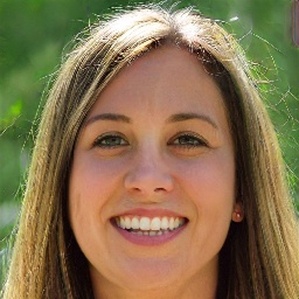
Reginald Austin
Education PhD in Medicine and Medical Science

Reginald Austin

Los Angeles, CA

Reginald is a distinguished medical research scientist and university lecturer with a PhD in Medicine and Medical Science from the Karolinska Institute. He tutors a broad spectrum of subjects, including Biology, Chemistry, and Math, for middle school through college-level students. Drawing on over 12 years of pre-clinical research and extensive lecturing at international universities, Reginald excels at simplifying complex scientific and mathematical concepts. He empowers students to build a robust understanding and confidence in their academic pursuits.
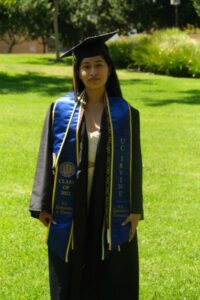

Estefania Flores
Education Mathematics with specialization in Finance an...

Estefania Flores

Los Angeles, CA

Estefania is a University of California, Irvine graduate with degrees in Mathematics and Quantitative Economics, specializing in tutoring Algebra, AP Calculus, and college-level math. With over five years of experience, she helps high school and college students by adapting to their learning styles and providing practical strategies for understanding complex concepts and excelling academically. Fluent in Spanish, Estefania also offers support in language learning.

Jennifer Dukov
Education B.S. in Biological Sciences, B.A. in English

Jennifer Dukov

Los Angeles, CA

Jennifer is a scientific research associate at UCLA with dual Bachelor's degrees in Biological Sciences and English from UC Irvine. Specializing in Biology, Science, and English, she brings over three years of experience mentoring college students in research settings, where she honed her ability to break down complex concepts and foster critical thinking. Jennifer's approach focuses on adapting to each student's needs, building their confidence, and developing independent problem-solving skills for lasting academic achievement.

Debra Guzman
Education B.A. in Liberal Studies

Debra Guzman

Los Angeles, CA

Debra is a credentialed educator with a B.A. in Liberal Studies from California State University Northridge and a Multi-Subject K-8 Teaching Credential. With extensive experience teaching across elementary and middle school grades, Debra specializes in tailoring lessons to individual students, drawing from her background as a gifted education teacher and her work with diverse learners in Universal Access and ELD classes. She is also bilingual in Spanish. Debra focuses on building foundational skills and fostering student confidence.

Angelica Olson
Education Master of Science in Psychology

Angelica Olson

Los Angeles, CA

Angelica holds a Master of Science in Psychology from Rosalind Franklin University of Medicine & Science, bringing a compassionate and meticulous approach to tutoring. With a background in clinical counseling, research, and academic writing, she helps students excel in subjects like psychology, biology, and essay composition. Angelica's expertise includes statistical analysis, diagnostic skills, and the ability to simplify complex scientific concepts, demonstrated through her experience supporting a PhD student in neurophysiology.

1 2

Testimonials & Reviews

What Parents Say

Why LA Families Choose Grade Potential

Private 1-On-1 Tutors That Come To You

No commute, no waiting rooms, no scheduling around a center’s hours. Grade Potential tutors go to you, whether that is your home, your local library, or a nearby coffee shop. Sessions happen where it is easiest for your family.

We Do The Matching, So You Don't Have To

Grade Potential connects students with local subject-matter experts based on their grade, specific challenges, learning style, and your family’s schedule.

100% Verified And Background Checked

Safety is our top priority. Every tutor is screened through multiple background checks, consistent with local requirements and platform standards. You can feel confident knowing who is coming into your home and working with your child.

96% of Families Would Recommend Us

Real results speak for themselves. In a recent survey, 96% of Grade Potential families said they were likely or very likely to recommend us to another family. Every session is built around what your child specifically needs to catch up and get ahead.

Math Tutoring By Subject & Class

Elementary Math

Elementary Math

Number sense, fractions, multiplication, and place value that every course builds on.
Pre-Algebra

Pre-Algebra

The bridge between arithmetic and algebra. Variables, ratios, and equations introduced for the first time.
Algebra

Algebra

Linear equations, systems, and quadratic functions. The backbone of all high school math.
Geometry

Geometry

Angles, proofs, and spatial reasoning. Builds the logical thinking that carries into advanced math.
Trigonometry

Trigonometry

The unit circle, sine, cosine, and identities. Essential groundwork for calculus and physics.
Pre-Calculus

Pre-Calculus

Exponential functions, polynomials, and vectors. The final step before calculus.
Calculus

Calculus

Limits, derivatives, and integrals. The math behind engineering, economics, and data science.
Statistics

Statistics

Probability, distributions, and data interpretation. Increasingly tested on the SAT and ACT.

How It Works

Share Your Unique Needs

Tell us where your child wants to level up and what success looks like for your family. We use that to build a learner profile and match them with the right local tutor.

We Find The Perfect Fit

No sorting through endless profiles and hoping for the best. Grade Potential does the work of connecting your family with an experienced tutor based on your learner’s goals and learning style. We have made thousands of matches. You just have to say yes.

A Background-Checked Tutor Shows Up At Your Door

Once you are matched, your tutor comes to you. Sessions happen on your schedule, in a setting that works for you. Your child gets focused, 1-on-1 support from a qualified professional, right from the start.

Math Standards And Curriculums In Los Angeles, CA

Elementary School Math Standards and Curriculums

Los Angeles Unified School District elementary students in grades K through 5 follow California's Common Core State Standards for Mathematics, along with California-specific guidance used by the district At this stage the focus is on building a solid arithmetic foundation, covering whole number operations, place value, fractions, and early problem-solving skills. LAUSD uses the Cognitively Guided Instruction (CGI) teaching model to develop deep conceptual understanding alongside procedural fluency.

Middle School Math Standards and Curriculums

In grades 6 through 8, LAUSD students move into more abstract mathematical thinking under California's Common Core standards, covering rational numbers, proportional relationships, expressions, equations, and an introduction to functions. LAUSD offers multiple middle school math pathways, including an accelerated track where strong students can reach Geometry by 8th grade. The district uses the Illustrative Mathematics (IM) curriculum for grades 6 through 12, a research-backed program designed to build conceptual understanding through problem-solving and mathematical discourse.

High School Math Standards and Curriculums

LAUSD high school students are required to complete Algebra 1, Geometry, and Algebra 2 as part of the district's A-G graduation requirements, and must remain enrolled in a math course through 11th grade. For students aiming at UC or CSU admission, a grade of C or better in each course is required. Beyond the core sequence, LAUSD high schools offer Pre-Calculus, AP Calculus AB and BC, Statistics, and Honors Advanced Mathematics for students on an accelerated path. Math performance in high school directly affects GPA, A-G eligibility, and college readiness.

Entrance Exam Test Scores In Los Angeles, CA

SAT Scores

The SAT is the primary college entrance exam for California high school students, particularly those applying to the University of California and California State University systems. California students averaged a composite SAT score of 1086 in 2026, slightly above the national average of 1028. It is worth noting that only 26% of California students take the SAT, meaning that average reflects a more self-selected, college-bound group. For students targeting competitive UC schools close to home, the bar is considerably higher. UCLA typically accepts students with SAT math scores between 650 and 780, making strong math preparation a real factor in admissions outcomes.

ACT Scores

While the SAT is by far the more commonly used college entrance exam in California, some students take the ACT when applying to out-of-state schools. Only about 3% of California high school graduates take the ACT, meaning those who do are a highly self-selected, college-bound group. California's average ACT composite score for the class of 2024 was 26.5, well above the national average of 19.4, reflecting that self-selection. The ACT math section covers material spanning all years of high school math, from pre-algebra through basic trigonometry, making it a strong test of cumulative math knowledge built up across K-12.

Math Programs and Resources Near Los Angeles, CA

Math University Programs

Los Angeles is home to some of the strongest math programs in the country, giving students who build a solid academic foundation a real shot at exceptional higher education opportunities close to home. UCLA ranks among the top 15 colleges for math in the United States and offers programs spanning pure mathematics, applied mathematics, mathematical biology, and actuarial science. USC, located in the heart of Los Angeles, offers a blend of pure and applied mathematics programs that encourage interdisciplinary study with engineering and the sciences. Just outside the city, Caltech in Pasadena is widely recognized for its exceptional mathematics program, with a tight-knit community, a strong emphasis on research, and a high faculty-to-student ratio that gives undergraduates significant personal attention.

Math Resources

Los Angeles is home to several well-known university math programs, giving students who build a strong academic foundation access to respected higher education opportunities close to home. UCLA's Math Circle is a free program for students in the greater Los Angeles area offering problem-solving sessions and competition preparation across topics like number theory, combinatorics, and advanced geometry. Cal State LA runs its own Math Circle, open to students from grade 3 through high school, with a focus on math competitions including the American Math Competitions and building confidence in students who want to go further in the subject. Both programs are university-backed and designed to stretch students who are ready for more than what the classroom offers. For students who need foundational support before reaching that level, focused 1-on-1 tutoring can be a strong starting point.

Finding A Math Tutor In Los Angeles, CA

A math tutor’s job is to identify where the sequence broke down for your child, not just review the chapter they’re on this week. A student struggling with linear equations in Algebra 1 is usually missing something earlier, from pre-algebra or integer operations, not the current lesson. A tutor traces it back to that point, addresses it directly, and rebuilds from there.

That work happens inside a specific curriculum that varies based on where the student goes to school. Los Angeles students follow California’s version of Common Core, which introduces concepts like area arrays and number bonds in elementary school and moves through an accelerated pathway that can reach Algebra 1 by 8th grade. By high school, the sequence runs through courses that carry real weight for UC and CSU eligibility.

A tutor familiar with how California builds that sequence knows where to look when something stops making sense. Reviewing the week’s homework is not the same thing.

The most common sign is avoidance. A child who rushes through math homework, shuts down when it comes up, or says they do not understand it may need more support than they’re currently getting.

Other signs are easier to miss. If your child can get the right answer but cannot explain how, or copies steps without understanding why they work, the gap is already there. It just has not shown up on a grade yet.

In LAUSD, fewer than 3 in 10 fourth graders scored proficient in math on the most recent national assessment. That number improves as students move up, but it means a lot of kids enter middle school with gaps they never had a chance to close.

In Los Angeles, that window can close quickly. LAUSD students can reach Algebra 1 by 8th grade, and the concepts that lead up to it build quickly. A gap in 5th or 6th grade that goes unaddressed often becomes a bigger academic challenge in 7th or 8th grade.

Tutors in Grade Potential’s network support students in math from Kindergarten through college. In elementary school, that means number sense, place value, fractions, and multiplication.

In middle school, the focus shifts to ratios, expressions, equations, and the pre-algebra foundations that California uses to accelerate students toward Algebra 1 by 8th grade.

In high school, tutors work through Algebra 1 and 2, Geometry, Pre-Calculus, Calculus, and Statistics.

That matters in Los Angeles because LAUSD requires three years of math to meet UC and CSU A-G eligibility, with four years recommended. Students applying to competitive programs or out-of-state schools need a transcript that reflects that full sequence, and each course in it depends on the one before it.

Start with someone who knows California’s math curriculum specifically. Common Core in California has its own pacing and structure, and LAUSD implements it across a wide range of school types, from neighborhood public schools to magnet programs to charters. A tutor who is not familiar with how California sequences its content, or with how LAUSD structures courses across grade levels, will take longer to be useful to your child.

Beyond curriculum knowledge, look for someone with direct experience at your child’s grade level, not just general math ability. A tutor who excels at calculus is not automatically prepared to teach a 3rd grader multiplication strategies or a 5th grader fraction division. For anyone coming into your home, a background check before the first session is the minimum bar. Ask specifically whether that step has been completed before scheduling.

Math tutoring in Los Angeles typically costs between $50 and $150 per hour depending on grade level, subject complexity, and tutor credentials. Elementary and middle school tutoring tends to sit at the lower end of that range. High school tutors working through AP Calculus, AP Statistics, or SAT and ACT math prep tend to be higher.

What the rate reflects is not just math knowledge but the ability to identify where a student’s understanding needs more support within a specific curriculum and address it at the source. A student who has needed support since the start of the school year typically benefits more from consistent weekly sessions than from a single last-minute session.

Yes, and usually faster than most parents expect once the real gap is identified. In LAUSD, grades are tied to specific California standards at each grade level. A student who is lost on one standard tends to fall behind on every standard that builds on it, which makes the grade problem look bigger than it actually is.

A tutor works backward from where the confusion started, addresses it directly, and the improvement in grades follows the improvement in understanding. For high school students, grades also determine A-G eligibility for UC and CSU admissions. A student who falls behind in a required math course may need additional time or coursework to stay on track, which can affect their transcript and future options. Getting ahead of that, rather than recovering from it, is the better outcome.

A good tutor can provide support with both, and the two often reinforce each other. In a regular session, a tutor uses homework as a diagnostic tool. Consistent errors on multi-step problems, sign mistakes in algebra, or confusion on word problems all point to specific concepts worth addressing directly.

For LAUSD students preparing for the Smarter Balanced Assessment, the test measures reasoning and application rather than computation alone, which means prep has to go deeper than drilling arithmetic. For standardized tests like the SAT and ACT, the math sections cover defined content areas: algebra, problem solving, data analysis, and advanced math for the SAT; pre-algebra through trigonometry for the ACT. A tutor builds a study plan around the specific areas where your child has the most room to improve and works through practice problems under realistic conditions.

Elementary math in LAUSD is the foundation everything else is built on, and the curriculum is more conceptually demanding than most parents realize. California’s Common Core standards introduce number bonds, area models, and visual reasoning strategies that look very different from how most adults learned arithmetic.

A child who gets through early grades without fully grasping those concepts will carry the gaps into every year that follows. Fractions build on multiplication. Ratios build on fractions. A tutor working with an elementary student catches those weak spots early, before they compound. One-on-one attention also gives younger students the space to ask questions they would never raise in a classroom of 30, which is often where the real learning happens.

Middle school is often where students begin to need more structured support as math becomes more abstract and cumulative. The Illustrative Mathematics curriculum used in LAUSD grades 6 through 12 is built around problem solving and mathematical reasoning, which requires a different kind of understanding than computation-based work.

A student who is not fully comfortable with fractions and ratios entering 6th grade will struggle with the abstract thinking pre-algebra demands. A tutor works through those foundational gaps at your child’s pace before they affect grades more significantly or limit future course options. Getting ahead of it in 6th or 7th grade saves significant ground in high school.

High school math in LAUSD is a prerequisite sequence, and every course assumes the previous one was fully understood. A student who struggled through Algebra 2 will carry that into Pre-Calculus. A shaky grasp of limits makes Calculus harder than it needs to be.

Beyond coursework, LAUSD high school students need to complete the full A-G sequence to qualify for UC and CSU admission, which means falling behind in a core math course has real consequences for college eligibility. A tutor addresses those gaps in real time before they grow into larger academic setbacks or limit future course and admissions options. For students in AP Calculus or AP Statistics, a tutor keeps them on track through material that moves faster than most classroom settings can accommodate.

Grade level experience and subject knowledge are both required, and they are not the same thing. A tutor with a strong background in advanced mathematics is not automatically equipped to teach a 4th grader long division using LAUSD’s visual model approach, or walk a 6th grader through pre-algebra the way Illustrative Mathematics sequences it.

Ask specifically whether the tutor has worked with students at your child’s grade level and whether they are familiar with how LAUSD structures that material. Beyond fit, look for someone who asks where the confusion started before explaining anything.

Strong math tutors diagnose first and teach second. They also have more than one way to explain a concept when the first approach does not land. Reliability matters just as much. A student behind in a subject that compounds the way math does cannot afford to lose sessions to cancellations.

The CAASPP tests California students against the Common Core State Standards for their specific grade level, and the format is worth understanding before preparation begins. The questions are not primarily computational.

Many require students to explain their mathematical reasoning, interpret data sets, and work through multi-step problems without a clear template to follow. That means the most effective preparation is not drilling arithmetic or reviewing chapters at random. It starts with identifying which specific California standards your child is not yet meeting at their grade level and building those up systematically over time.

The CAASPP testing window in California typically opens in the spring, which means preparation that begins in January or February has a genuine advantage over a two-week push before the test. A tutor who knows California’s grade-level standards can map where the gaps are and build sessions around them, which is often more targeted than a general test prep program.

In most cases, private K-12 tutoring is not deductible as a personal expense under federal or California state tax law. There are narrow exceptions worth knowing about.

Families with a child who has a diagnosed learning disability may be able to deduct tutoring costs as a medical expense if a licensed physician has recommended it as part of treatment, and if total qualifying medical expenses exceed the applicable federal threshold. California’s state tax rules on this can differ from the federal rules, so it is worth reviewing both separately.

Some employer-sponsored dependent care flexible spending accounts also allow tutoring expenses to qualify under specific conditions. Because this area of tax law is specific and subject to change, it is worth speaking with a tax professional familiar with California filings before drawing any conclusions about what qualifies in your situation.

Grade Potential Frequently Asked Questions

We do the matching for you. A vetted, background-checked tutor who knows your child's curriculum comes directly to your door. No marketplace, no sorting through profiles, no guesswork.
Most families are matched with a tutor within 2 to 3 business days, depending on subject, location, and schedule availability. If you have an upcoming test or a tight timeline, let us know during intake and we will prioritize your match accordingly.
Sessions happen where it is easiest for your family. That might be your home, a local library, or a nearby coffee shop. Online sessions are available when in-person does not work.
Grade Potential works with experienced, professional independent tutors who have a track record of working one-on-one with students. Most hold degrees in their field and many are certified teachers or graduate students with specialized subject expertise.
Yes. Before any introduction is made, every tutor completes a SimpliVerified background check consistent with local requirements and platform standards. You know exactly who is coming to your door.
Packages are customizable based on your budget, session cadence, timeframe, and location. Clear pricing is presented before you begin, with no hard sales tactics and no obligation to purchase a long-term package.
No contract and no obligation to purchase a long-term package upfront. Sessions are flexible and pricing options are presented clearly so you can choose what works best for your family.
Reach out to your tutor directly to reschedule. We ask for reasonable advance notice so your tutor can adjust their schedule and your child does not lose momentum.
Refund eligibility depends on the package selected and the timing of the request. All terms are presented clearly before you commit so there are no surprises after the fact.
It happens and it is not a problem. Let us know and we handle the rematch at no additional cost. A new tutor is introduced directly so your child does not lose momentum or have to start from scratch.