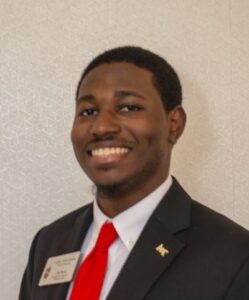
 Bachelor of Arts
Jonathan
White Lake, MI
Grade Potential makes connecting with the right private tutor in White Lake, MI simple. We connect K-12 and college students with experienced tutors at home, on campus, or at a location that fits your schedule.





 Bachelor of Arts
White Lake, MI
 Business Administration
White Lake, MI
Karla holds a degree in Business Administration from Autónoma de Baja California and a Spanish to English teacher associate certificate. She brings extensive experience in administrative and coordination roles, including managing office operations and organizing events for various institutions, from Absorption Systems to the Gobierno de Baja California. Karla is a patient and dedicated professional who helps students develop organizational skills and improve their learning outcomes.
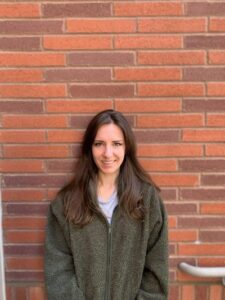 B.S. in Biological Sciences, B.A. in English
White Lake, MI
Jennifer is a scientific research associate at UCLA with dual Bachelor's degrees in Biological Sciences and English from UC Irvine. Specializing in Biology, Science, and English, she brings over three years of experience mentoring college students in research settings, where she honed her ability to break down complex concepts and foster critical thinking. Jennifer's approach focuses on adapting to each student's needs, building their confidence, and developing independent problem-solving skills for lasting academic achievement.
 B.S. in Information Management and Technology
White Lake, MI
Johnny graduated from Syracuse University with a B.S. in Information Management and Technology and offers tutoring in Science, including Biology, Environmental Science, and Earth & Space Science. He brings valuable experience from a Big Four consulting company, where he specialized in technology risk and financial audits, developing strong analytical and problem-solving skills. Johnny is dedicated to helping students understand complex concepts and develop practical skills for academic and future success.
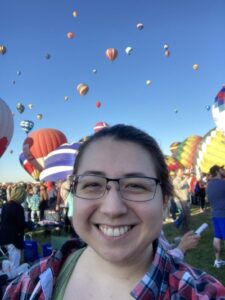 Master of Science (MS) in Geology
White Lake, MI
Isabella holds a Master of Science in Geology from West Virginia University and a Bachelor of Science from Indiana University. With experience as a teaching assistant for Johns Hopkins Center for Talented Youth and leading children's summer camps, she brings an empathetic and student-centered approach to tutoring. Isabella specializes in Science and Math, drawing on her extensive background in geology, environmental science, and technical analysis, and helps students develop effective learning strategies, especially those with diverse needs.
"As a high functioning individual with a head injury, my tutor has been amazing in assisting me in my master's program. She has the patience of a saint and broke down the steps in a detailed manner for me to fully grasp the material. I give her a gold star and thank God for her."
White Lake Tutors, MI
"My tutor was absolutely phenomenal. She is patient, knowledgeable, supportive, encouraging, resourceful, adaptable, attentive, and clear. I was very nervous about re-learning math, but Abbey made it enjoyable and even fun! Most importantly, she worked at my pace, which made all the difference. I not only learned the math skills I needed, but I understood them.Whenever I struggled with a problem, Abbey remained calm and encouraging, guiding me through each step with grace and ease. Her teaching style made me feel confident and capable.I truly cannot recommend Abbey highly enough. She made what felt like an intimidating task completely manageable—and even rewarding."
White Lake Tutors, MI
"We are so grateful for our tutor Reagan. My son had a test that was coming up quickly and we were in a huge need for assistance. Reagan met with my son for one hour and took care of any confusion my son had with the concepts and helped him ace his test. We couldn't have done it without Reagan! "

White Lake Tutors, MI
"Our tutor has been excellent! Both our kids have improved their GPA, and we are extremely happy with how the year has gone. "
White Lake Tutors, MI
"I am very impressed. My tutor was very patient and knew how to divide her time between the material."
White Lake Tutors, MI

No commute, no waiting rooms, no scheduling around a center’s hours. Grade Potential tutors go to you, whether that is your home, your local library, or a nearby coffee shop. Sessions happen where it is easiest for your family.


Grade Potential connects students with local subject-matter experts based on their grade, specific challenges, learning style, and your family’s schedule.

Safety is our top priority. Every tutor is screened through multiple background checks, consistent with local requirements and platform standards. You can feel confident knowing who is coming into your home and working with your child.

Real results speak for themselves. In a recent survey, 96% of Grade Potential families said they were likely or very likely to recommend us to another family. Every session is built around what your child specifically needs to catch up and get ahead.
Getting subject-specific support is easy. Whether a student needs to catch up, stay on track, or get ahead, Grade Potential matches students with the right tutor, based on their goals, learning style, and subject needs.

From elementary arithmetic to AP Calculus. Every grade level, every concept.

Biology, chemistry, physics, and earth science. Hands-on support for labs, tests, and exams.
Reading comprehension, writing, grammar, and literature. From early readers to AP English.

History, geography, civics, and economics. Built around your child’s grade-level curricular
Spanish, French, Mandarin and more. Conversational fluency and academic coursework covered.
One-on-one support for the full AP catalog. Build the depth and exam readiness colleges expect.

SAT, ACT, and more. Targeted prep on the specific content each exam tests.
Grade Potential matches students with the right tutor across every grade level, from early learning through college-level coursework. Each student is connected with a tutor who understands what they are working on, with one-on-one support tailored to their goals, pace, and learning needs.





Tell us where your child wants to level up and what success looks like for your family. We use that to build a learner profile and match them with the right local tutor.

No sorting through endless profiles and hoping for the best. Grade Potential does the work of connecting your family with an experienced tutor based on your learner’s goals and learning style. We have made thousands of matches. You just have to say yes.
Once you are matched, your tutor comes to you. Sessions happen on your schedule, in a setting that works for you. Your child gets focused, 1-on-1 support from a qualified professional, right from the start.